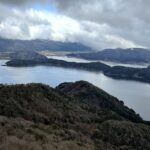
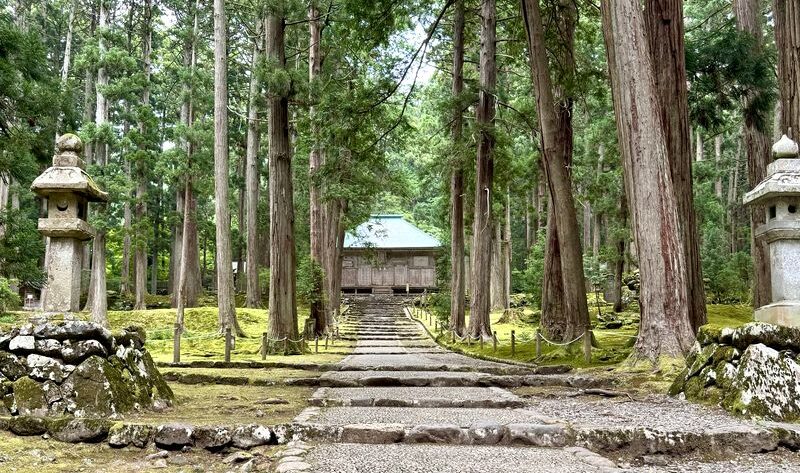
On August 3rd, we conducted a training session in Katsuyama.
With the guide of Asako, a member who is originally from Katsuyama City, we were escorted to the highlights of Katsuyama from 8:00 a.m. to 1:00 p.m. She even prepared a handout summarizing information about the Echizen Daibutsu and Heisenji Hakusan Shrine. Thank you so much.
The itinerary was as follows:
1.Echizen Daibutsu http://etizendaibutsu.com/
2.Heisen-ji Hakusan Shrine ( with Guided tour ) https://heisenji.jp/
3.Kagetsu-ro (Lunch)
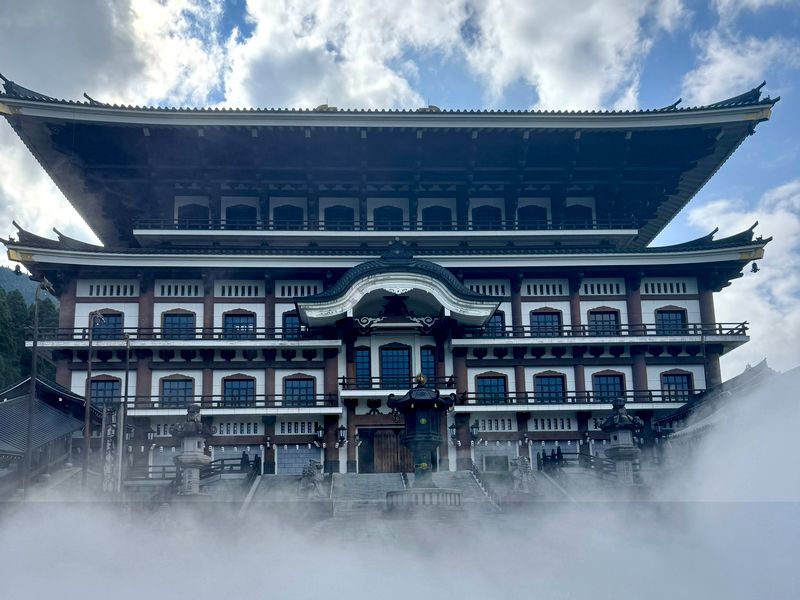
We gathered at the site at 8:00 AM, the opening time of Daishi-san Seidaiji Temple and Echizen Daibutsu. The purpose was to see ”the sea of clouds” that appear for one hour after opening (and one hour before closing). The artificial mist machine, time-limited, and well-executed promotion.
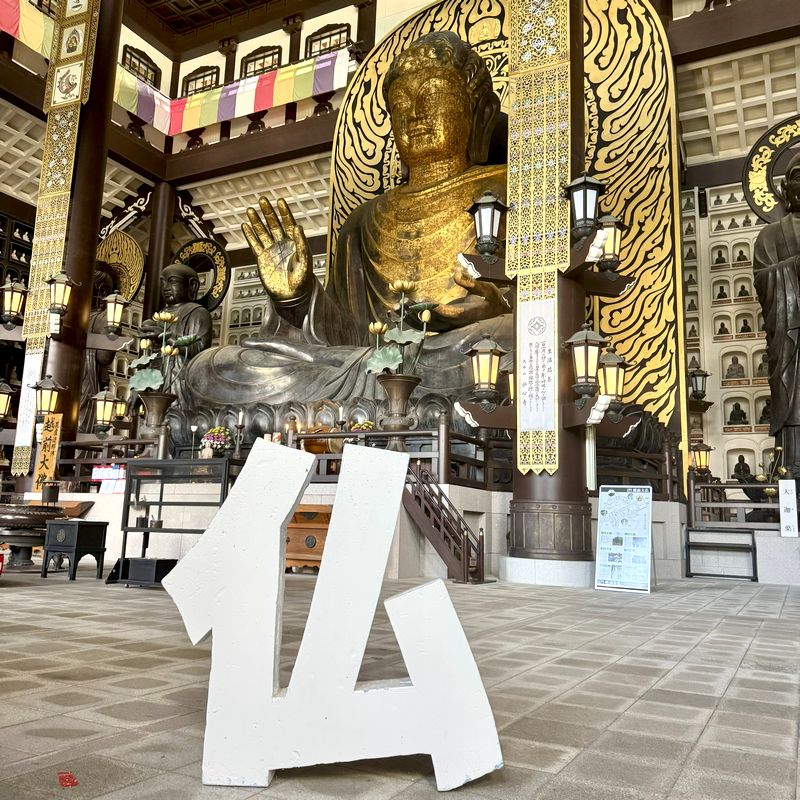
The Echizen Daibutsu (Great Buddha) is the largest indoor seated Buddha in Japan, with a height of 17 meters.
It is taller than the Great Buddha of Tōdai-ji in Nara, which is about 15 meters tall.
There is also a “Butsu” (仏) character placed nearby, and if you stand next to it with your arms and legs spread out in an “X” shape, you can take a photo that looks like you are a Great Buddha yourself.
I saw a character “Butsu” (仏) and thought of France.
Echizen Great Buddha is also known as the “Buddha of Success,” and I hope it brings good luck.
As a side note, the tallest standing Buddha in Japan is the Ushiku Daibutsu in Ibaraki Prefecture, which is 120 meters tall — about the same height as the Courtyard by Marriott Hotel in front of Fukui Station.
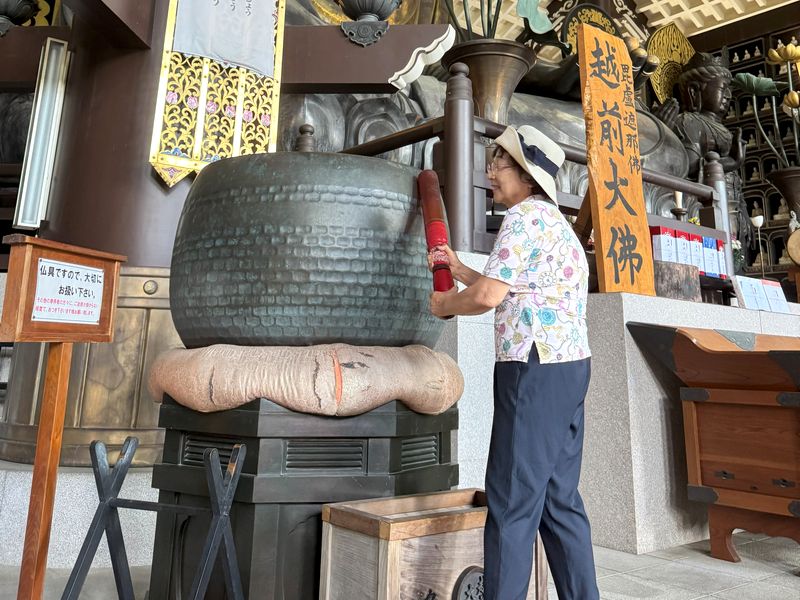
When the bell is rung, a clear sound echoes throughout the area, leaving a lingering impression and a feeling of purification. Although it is a fairly large Buddhist instrument, it appears small in comparison to the Great Buddha.
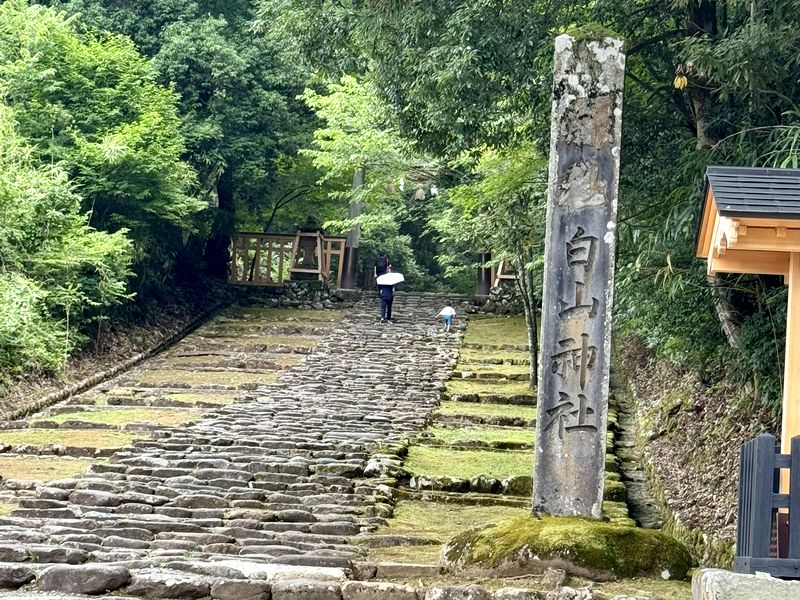
Next is Heisenji Hakusan Shrine.
Here, we took a guided tour with the official Hakusan Shrine tourist guide.
After all, this is a power spot. The air is refreshing and mysterious. The entire grounds are covered with moss, giving you a sense of the 1,300 years of history that has passed here.
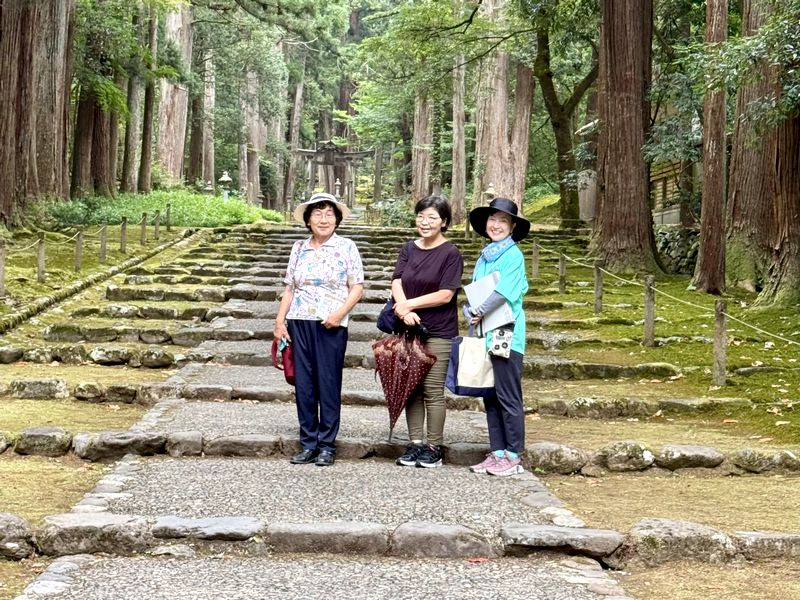
“One thing I want to do as an adult.” This is the spot where Japanese actress Sayuri Yoshinaga stood for “the JR East Otona no Kyūjitsu Club poster“ in 2018. After being shown the place by a local guide, we stood there for a commemorative photo — smile!
It is said that the great Buddhist priest Taichō once saw the goddess of Mt. Hakusan (Izanami-no-Mikoto) at Mitarashi Pond, and perhaps she looked something like this.
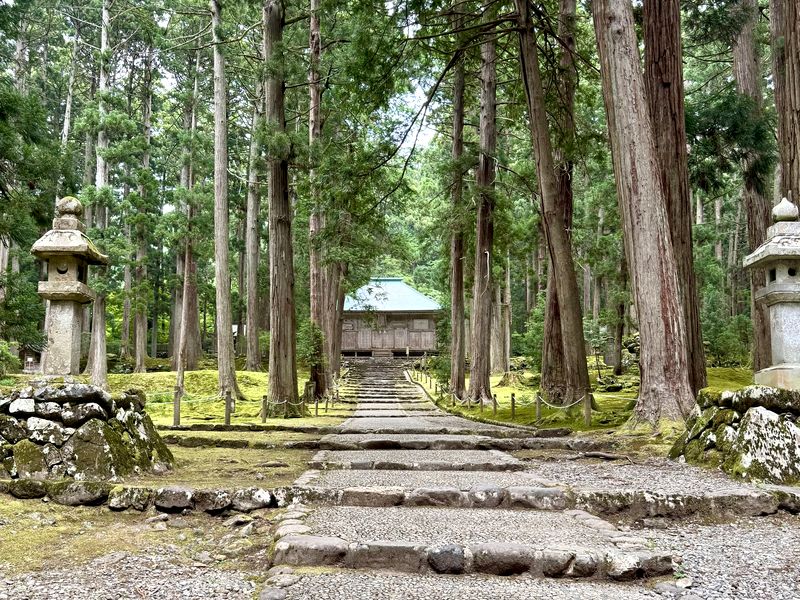
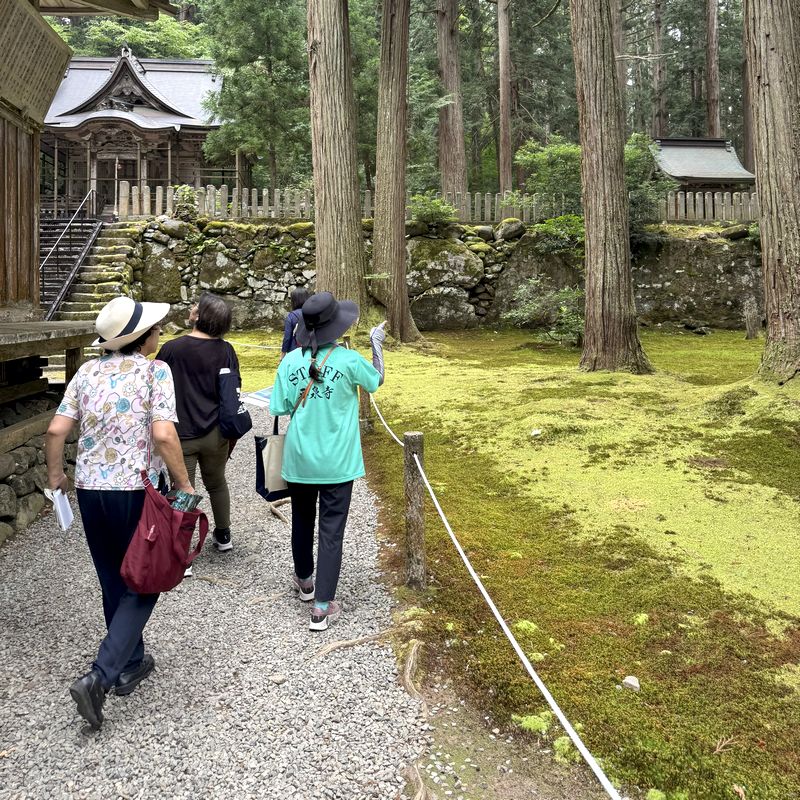
Passing through the worship hall, we are heading toward the Main Shrine, the Betsuzan Shrine, and the Onamuchi Shrine. The guide talks about a story related to stones along the way.
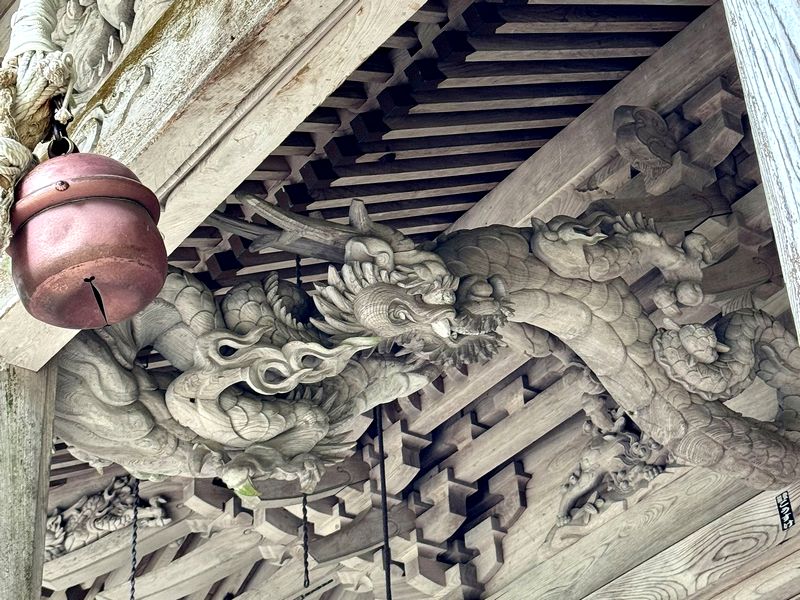
A photo of the magnificent “ascending dragon” carving at the Main Shrine.
Together with the “descending dragon” carving on the opposite side, it supports the eaves of the shrine.
The guide at Heisenji Hakusan Shrine shared stories that were deeply informative and enriching.
I also appreciated their cheerful personality.
It really is enjoyable to visit famous spots while listening to local guides.
I think it was nice that I was able to stop by places that I might have passed by if I had been traveling alone, thanks to the guide’s guidance.
As a guide myself, I would like to be that kind of guide myself.
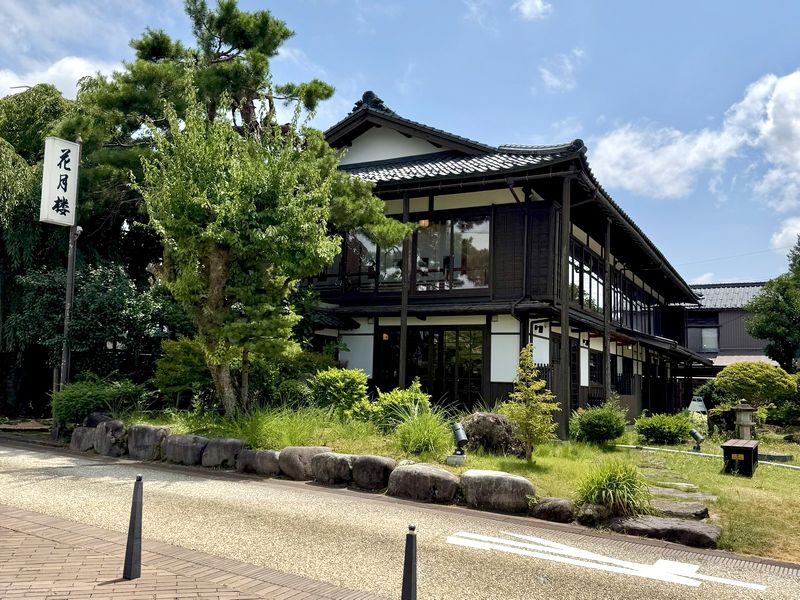
Our final destination was Hanatsuki-ro, where we had lunch.
This restaurant is not just a place to eat, but also a historic building completed in 1897, with a history of 128 years. It is one of Katsuyama’s tourist attractions and is registered as a national tangible cultural property.
I had the soy sauce katsu donburi set meal.
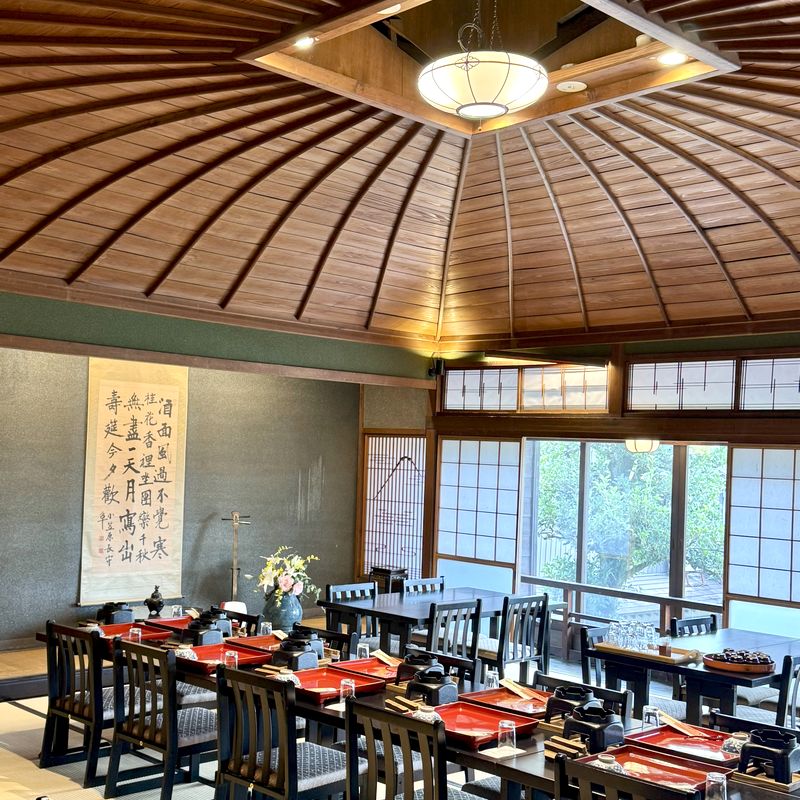
After lunch, we visited the second floor to see the umbrella ceiling in the large hall, the geisha waiting room, and the cashier’s office. Thanks to the previous training session on the Katsuyama Sagicho Festival, I gained a deeper understanding, and with good weather, I was enjoying the sightseeing as well.
Thank you very much to Asako-san, who was in charge of this training session.